How AI is Transforming Stock Analysis in Australia
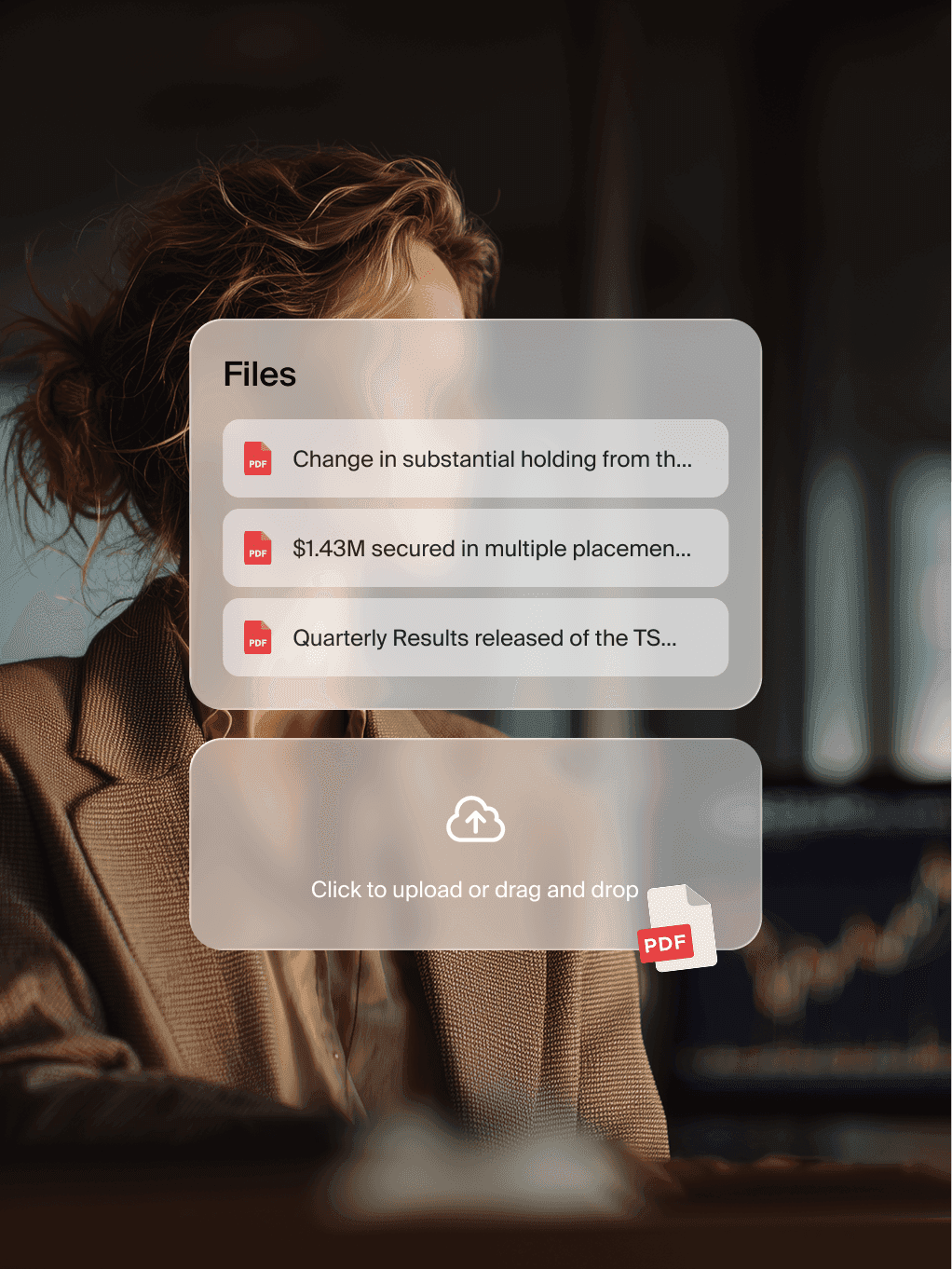
Artificial intelligence is reshaping how Australian investors research stocks, analyse company filings, and make portfolio decisions. From automated announcement reading to pattern recognition across financial data, AI tools are giving ASX investors capabilities that did not exist even two years ago. Here is how the transformation is playing out and what it means for different types of investors.
The Traditional Stock Analysis Process
For decades, stock analysis on the ASX followed a familiar pattern. Fundamental analysts would read company reports, build financial models in spreadsheets, compare valuations to peers, and form an investment thesis. Technical analysts would study price charts, volume patterns, and momentum indicators. Both approaches required significant time, expertise, and manual effort.
The bottleneck was always information processing. A fund manager covering 30 ASX companies during reporting season might face 60 or more filings in a single month, each running 30 to 50 pages. Small-cap companies with limited analyst coverage often went unread entirely. Retail investors relied on broker notes, media summaries, and online forums — all second-hand interpretations of the primary source data.
Where AI Is Making the Biggest Impact
Announcement analysis and summarisation. The most immediate application of AI in ASX investing is reading and analysing company announcements in real time. Tools like Anna process the full text of every ASX filing the moment it is lodged, extracting key metrics (revenue, profit, guidance, dividends), flagging changes in risk language, and delivering personalised briefs to investors. This collapses the time from announcement to understanding from hours to seconds.
Natural language processing of financial documents. Modern AI can parse the complex language of financial reports, distinguishing between boilerplate text and material disclosures. It can identify when a company's outlook commentary has shifted from positive to cautious, when new risk factors have been added, or when previously reported KPIs have been quietly dropped. These subtle signals are often the most informative — and the most likely to be missed by human readers under time pressure.
Pattern recognition across companies and sectors. AI can compare disclosures across an entire sector simultaneously. When one mining company reports rising costs, AI can flag whether peers are experiencing the same pressure. When a technology company changes its revenue recognition approach, AI can identify whether the shift is industry-wide or company-specific. This cross-company analysis, which would take a human analyst days, happens in moments.
Sentiment and tone analysis. The way management talks about their business often tells you as much as the numbers. AI tools analyse management commentary for shifts in confidence, specificity of guidance, and hedging language. A CEO who shifts from concrete forecasts to vague platitudes may be signalling upcoming challenges before the numbers confirm it.
What AI Cannot Replace
AI is a powerful information processing tool, but it does not replace investment judgment. It cannot assess management quality from a face-to-face meeting. It cannot weigh the strategic implications of an acquisition against your personal risk tolerance. It does not account for macroeconomic factors, geopolitical risks, or the dozens of qualitative considerations that inform investment decisions.
The most effective use of AI in stock analysis is as an information layer that sits between raw data and human decision-making. AI handles the reading, extraction, and comparison. The investor handles the judgment, strategy, and portfolio construction. Trying to use AI as a decision-maker rather than an information processor is where most people go wrong.
Impact on Different Investor Types
Institutional investors are using AI to expand their effective coverage universe. A fund manager can now stay across 100 companies as thoroughly as they previously monitored 30. The AI handles the first-pass analysis, and the analyst focuses on the companies and disclosures that warrant deeper investigation.
Retail and SMSF investors benefit the most in relative terms. Previously, individual investors had no practical way to process the volume of ASX announcements that affect their portfolios. AI tools give them access to the same primary source intelligence that institutional teams have always had, at a fraction of the cost.
IR and corporate teams use AI-powered monitoring to track peer disclosures and competitive intelligence. When a competitor announces a capital raising, guidance change, or strategic pivot, AI ensures the IR team knows about it immediately — not when it appears in the next day's news.
The Australian Context
AI-powered stock analysis is particularly relevant for the ASX for several reasons. The Australian market has a long tail of under-covered small and mid-cap companies that receive little or no analyst attention. The continuous disclosure regime means companies communicate primarily through ASX announcements rather than US-style earnings calls. And the concentrated nature of the ASX (dominated by financials and resources) means sector-wide AI analysis can provide especially valuable cross-company insights.
The franking credit system also creates a uniquely Australian investment dynamic where dividend analysis matters more than in most global markets. AI tools that automatically extract dividend information, payout ratios, and franking percentages from results announcements save significant manual effort for income-focused investors.
Getting Started with AI-Powered Analysis
If you have not yet incorporated AI into your ASX research process, the simplest starting point is an announcement analysis tool like Anna. Set up a watchlist of the companies in your portfolio, and experience the difference between reading a 40-page PDF manually and receiving an AI-generated brief that highlights what matters — with source links so you can verify every insight. For most investors, this single change transforms their ability to stay informed about their holdings.
Explore more articles
Founded by traders. Engineered by humans. Designed for every investor.
© Anna 2025 - All Rights Reserved